Description
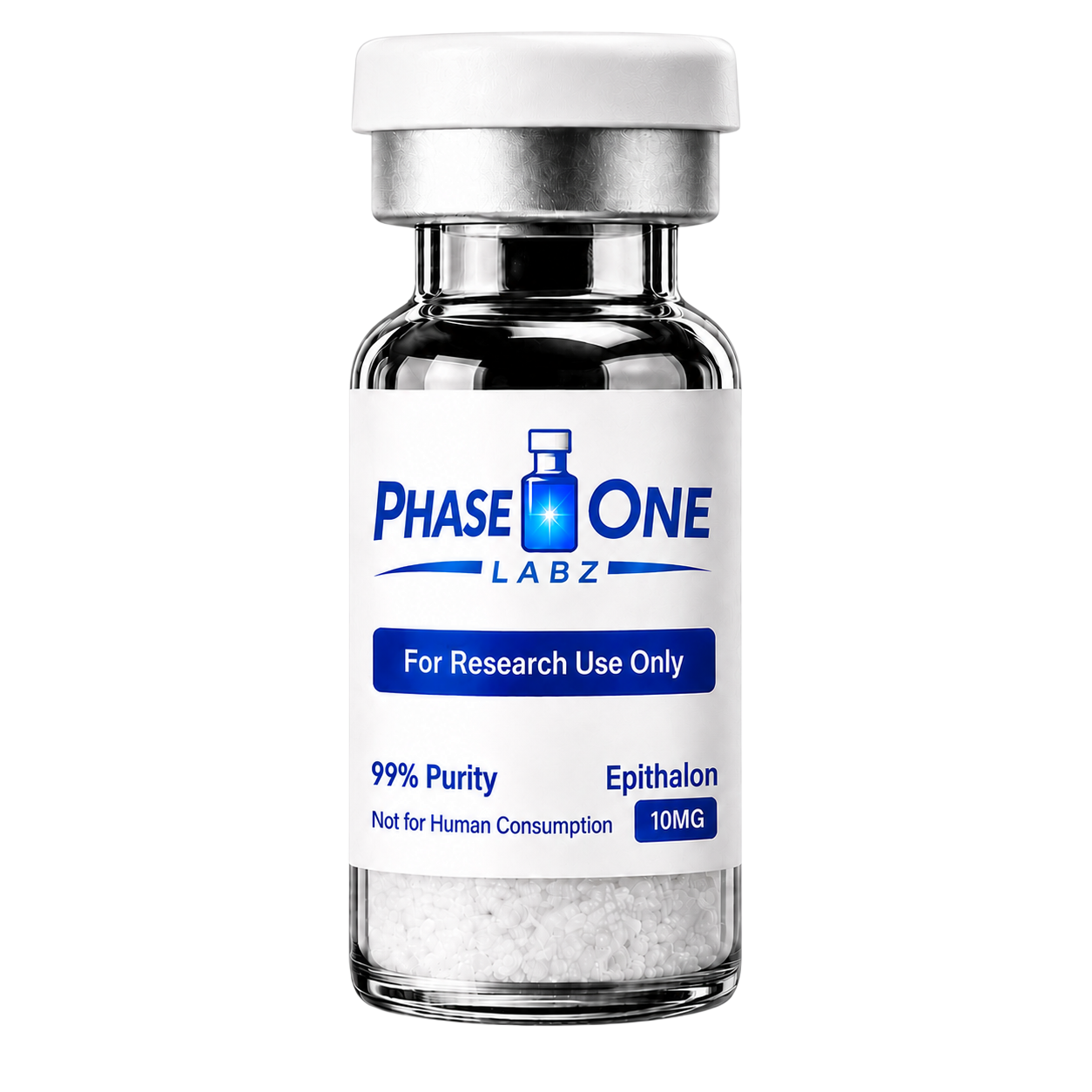
Epithalon — Synthetic Telomerase-Activating Tetrapeptide
Epithalon (also Epitalon or Epithalamin) is a synthetic tetrapeptide originally characterized by Vladimir Khavinson at the St. Petersburg Institute of Bioregulation and Gerontology. Derived from the pineal-gland polypeptide complex epithalamin, it has been studied for more than thirty years for its effect on telomerase expression, circadian rhythm regulation, and age-associated biomarker shifts in animal and cell-culture models.
Mechanism of Action
Preclinical studies show Epithalon upregulates telomerase activity in somatic cells, extending telomere length in cultured human fibroblasts beyond the Hayflick limit. It modulates pineal melatonin production, restores age-impaired diurnal cortisol patterns in aged rodents, and influences gene expression along the hypothalamic-pituitary axis. Its mechanism is hypothesized to involve direct interaction with regulatory regions of the telomerase reverse transcriptase (TERT) gene, though the binding model remains under active investigation.
Research Applications
- Telomerase activity and telomere length studies
- Cellular senescence and Hayflick-limit research
- Circadian rhythm and melatonin axis investigations
- Age-associated gene expression analysis
- Longevity biomarker research in aged animal models
Product Specifications
- Quantity: 10mg per vial
- Purity: ≥99% (HPLC verified)
- Molecular Formula: C₁₄H₂₂N₄O₉
- Molecular Weight: 390.35 g/mol
- Sequence: Ala-Glu-Asp-Gly
- Form: Lyophilized powder
- Storage: Refrigerate after reconstitution
- Testing: Third-party lab tested, COA available on Portal
- Actual Tested Content: 10.6mg
For research purposes only. Not for human or veterinary use.
Reviews
There are no reviews yet.