Description
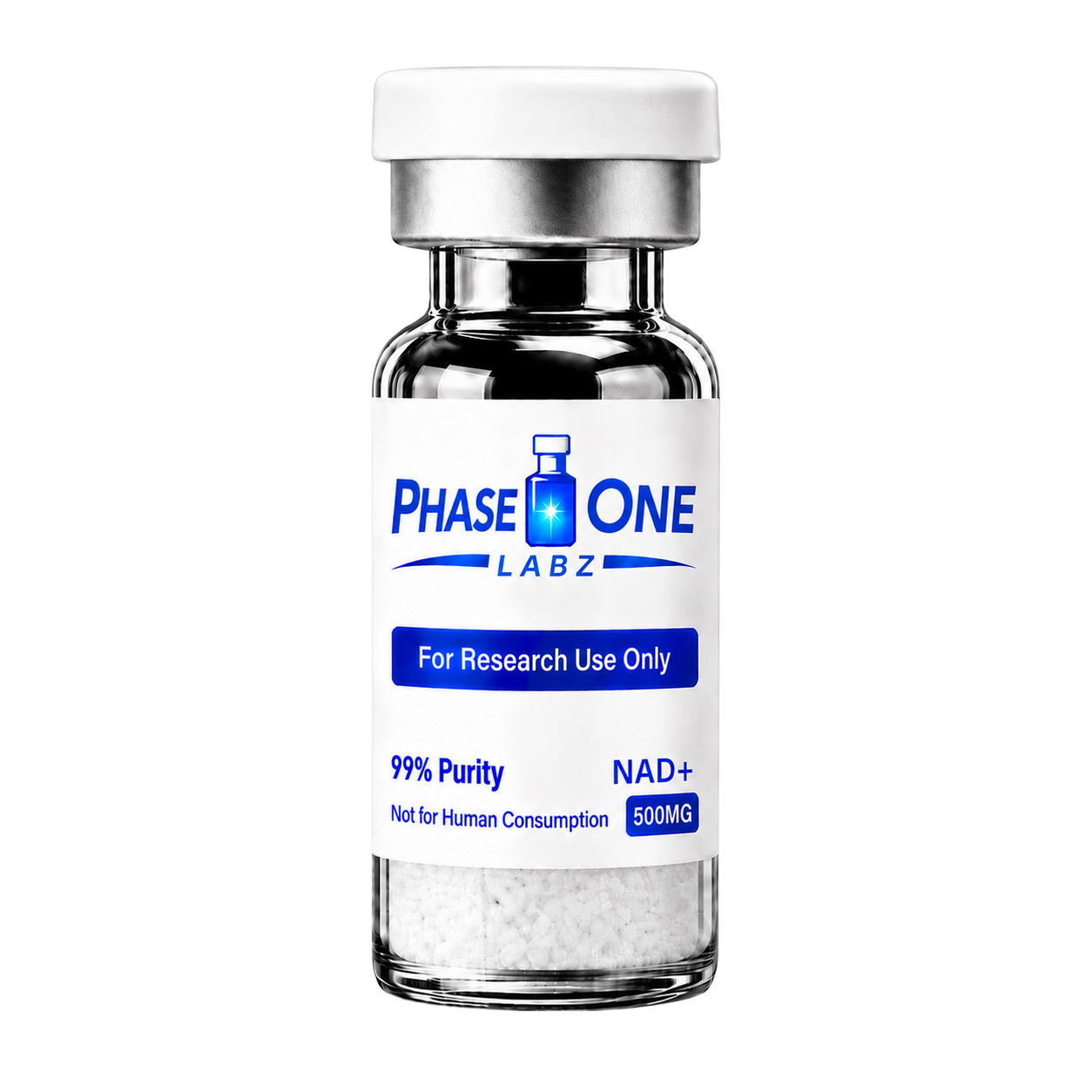
NAD+ — Nicotinamide Adenine Dinucleotide
NAD+ (nicotinamide adenine dinucleotide, oxidized form) is a pyridine nucleotide coenzyme central to every major energy-producing pathway in the cell. Intracellular NAD+ pools decline measurably with age, a phenomenon that has positioned NAD+ restoration at the center of modern longevity and metabolic research. Unlike precursors such as NR or NMN, NAD+ itself is delivered directly in research protocols for rapid pool expansion.
Mechanism of Action
NAD+ is an obligate cofactor for sirtuin deacetylases (SIRT1–SIRT7), which regulate transcription, DNA repair, mitochondrial biogenesis, and circadian metabolism. It also serves as a substrate for PARP-family enzymes during the DNA damage response and for CD38, a plasma-membrane ectoenzyme whose age-related upregulation contributes to declining NAD+ pools. Restoration of intracellular NAD+ supports activity at all three enzyme classes, with downstream consequences for mitochondrial function, chromatin state, and genomic stability.
Research Applications
- Sirtuin activation and longevity pathway studies
- Mitochondrial biogenesis and bioenergetics research
- DNA damage response and PARP activity investigations
- Age-related metabolic decline models
- Circadian rhythm and metabolic timing
- CD38-mediated NAD+ consumption studies
Product Specifications
- Quantity: 500mg per vial
- Purity: ≥99% (HPLC verified)
- Molecular Formula: C₂₁H₂₇N₇O₁₄P₂
- Molecular Weight: 663.43 g/mol
- Form: Lyophilized powder
- Storage: Refrigerate after reconstitution
- Testing: Third-party lab tested, COA available on Portal
- Actual Tested Value: 482.mg
For research purposes only. Not for human or veterinary use.
Reviews
There are no reviews yet.